
In 2024, North Carolina expanded Medicaid to cover hundreds of thousands more residents, a major step toward improving access to care. But for patients in need of dental services, having insurance doesn’t necessarily mean being able to find a provider.
In this state, 93 of our 100 counties are designated as Dental Health Professional Shortage Areas (DHPSAs). While North Carolina has moved up in national dentist rankings, most workforce growth has concentrated in just five well-supplied counties: Durham, Guilford, Mecklenburg, Pitt, and Wake, leaving rural areas underserved.
As we build toward our annual Oral Health Day, NCOHC is exploring different aspects of the Oral Health Workforce. In this installment, I aimed to understand the challenges facing rural areas and explore opportunities for improvement.
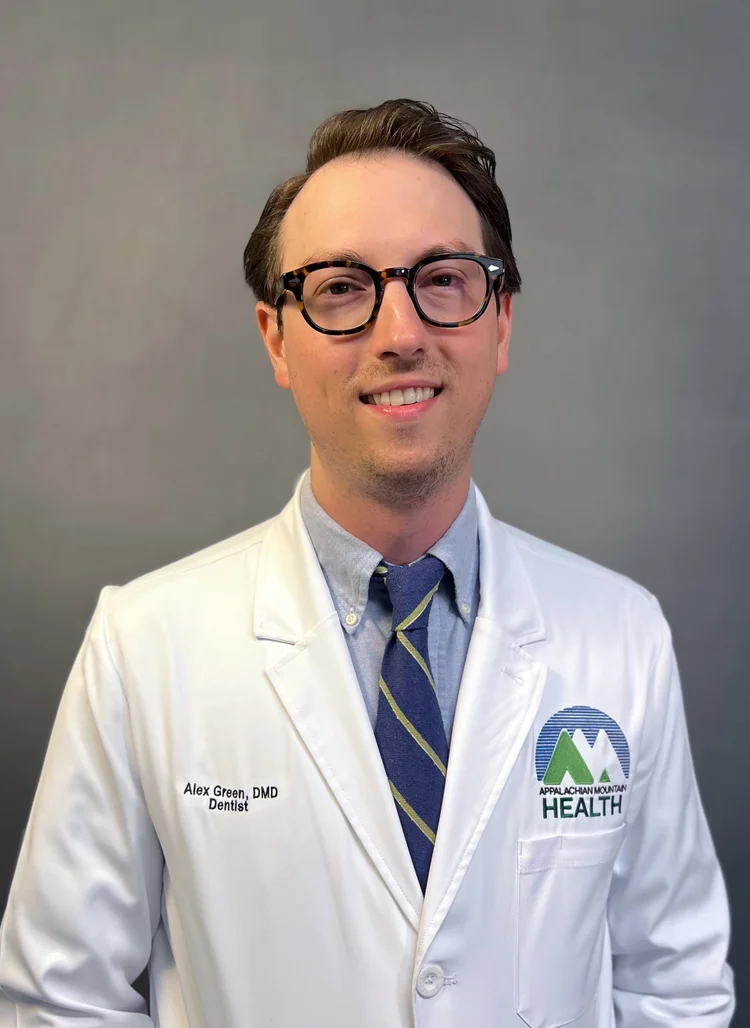
To better understand the issue, I spoke with Alex Green, DMD, MPH. Dr. Green is the Chief Dental Officer of Appalachian Mountain Health, a federally qualified health center (FQHC) headquartered in Asheville, North Carolina. Appalachian Mountain Health operates three clinics across western North Carolina, with a fourth on the way, and operates a mobile dental unit that serves schools and early childhood programs. Like many safety net providers, they are on the front lines of a system under strain.
Key challenges
“At FQHCs, we see a population with lower socioeconomic status, lower education levels… and issues with dental or oral health literacy,” Dr. Green explained. Providers frequently find themselves coaching and educating adult patients on basic oral health practices.
But the number one barrier to care is still financial; specifically, a lack of insurance or insufficient income. FQHCs are able to offer sliding fee pricing, but the cost of care is still a significant impediment.
Medicaid expansion aimed to address that barrier, bringing coverage to roughly 650,000 people statewide in 2023. But even when patients gain coverage, their access to care does not automatically improve. This is because relatively few dental providers accept Medicaid, and even fewer are accepting new Medicaid patients.
“We gave them Medicaid overnight,” said Dr. Green. “That was fantastic because they now have insurance. But now they go and try to get appointments, but the number of providers who accept Medicaid is totally different from the number who are actively accepting new patients.”
Safety net clinics like Appalachian Mountain Health saw an influx of patients. “We didn’t have the capacity before, and we definitely didn’t have the capacity now.”
There have been some bright spots. Over the past decade, North Carolina has seen growth in FQHCs, FQHC look-alikes, and public health dental programs, strengthening the state’s dental safety net. Organizations have also invested in community-based support, such as community health workers who help patients navigate Medicaid enrollment and access care.
FQHC is a legal status bestowed upon facilities designed to serve a population that is medically underserved. If they meet the qualifications, these facilities receive benefits like higher reimbursement rates from Medicare and Medicaid, as well as federal funding through Section 330 of the Public Health Service Act (PHS).
Because there is a limited number of available grants, and applications are accepted on a multi-year cycle, many health centers either don’t apply for or don’t receive federal funding. Those organizations that meet all of the eligibility requirements of an FQHC, but do not receive grant funding, are generally called “FQHC look-alikes.” For some organizations, this can be a stepping stone to a full FQHC designation.
Over the past decade, North Carolina has seen growth in FQHCs, FQHC look-alikes, and public health dental programs.
“I think back to when I was graduating from dental school. It was unusual that I went to an FQHC,” said Dr. Green. “But that’s becoming far more prominent now, just over the last few years. Dental graduates are seeking safety net centers, both from their ability to get student loan repayment options, but also from a mission mindset.”
Finding solutions and looking toward the future
Even with more dentists going to FQHCs, this state simply needs more providers to meet the needs of a growing population. Addressing that workforce gap will require policy changes.
“I think we’d have to get the whole of the dental workforce behind actually accepting Medicaid,” he said. One potential path forward is increasing Medicaid reimbursement rates, which could incentivize more non-FQHC providers to participate. At the same time, Medicaid expansion has already created the opportunity to grow existing safety net programs and add new ones. Safety net clinics are a more viable model for serving high-need populations than the traditional private practice model.
Other policy priorities for workforce expansion include expanding training programs for dental hygienists and assistants, maintaining restrictions on non-dentist ownership of practices. As NCOHC prepares for its Oral Health Day and broader workforce summit, we must build on the progress already underway. Safety net programs have been an excellent pillar, but we need broader change to create an oral health system that supports everyone.
NCOHC, a Foundation for Health Leadership & Innovation program, works to advance systems-level changes, improving the overall health and well-being of all North Carolinians by increasing access and equity in care. Sign up for our monthly newsletter to join the network and get involved!